

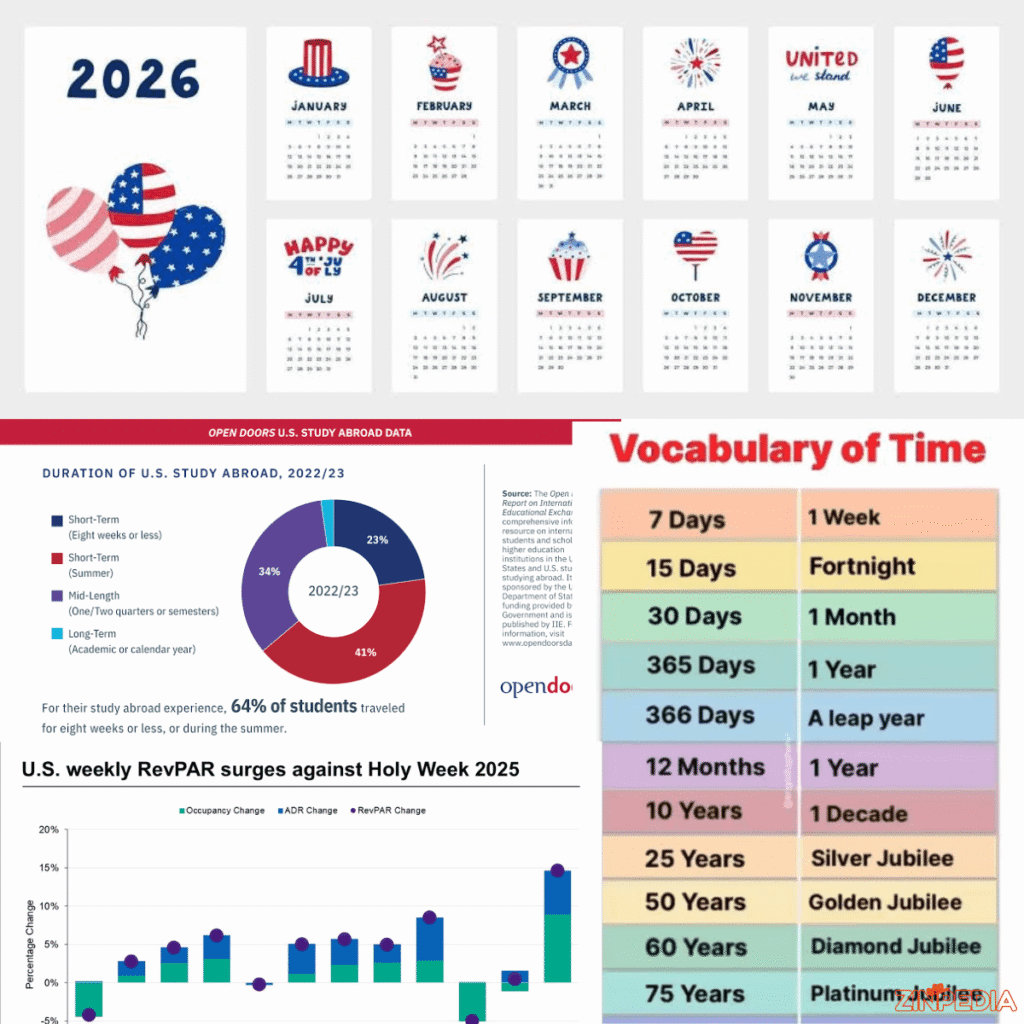
If you have ever tried to plan a yearly schedule, calculate weekly pay, organize school terms, or count down to an important date, you may have wondered: how many weeks are in a year?
The quick answer is:
A normal year has 52 weeks and 1 extra day. A leap year has 52 weeks and 2 extra days.
That is because a standard year contains 365 days, while a leap year contains 366 days. Since one week has 7 days, neither 365 nor 366 divides perfectly into complete weeks.
There is one interesting exception. Depending on how calendar weeks are numbered, some years can officially contain 53 numbered weeks.
This guide explains exactly how the calculation works, why leap years are different, when a year can have 53 weeks, and how this information can help with everyday planning.
How Many Weeks Are in a Year?
A standard calendar year contains:
365 days ÷ 7 days per week = 52 weeks and 1 day
Therefore, a normal year has:
- 52 complete weeks
- 1 additional day
- 365 days in total
This is why saying that a year has exactly 52 weeks is slightly inaccurate.
If a year contained exactly 52 weeks, it would have:
52 × 7 = 364 days
But a normal year actually has 365 days.
That one extra day is important because it causes calendar dates to shift from one weekday to another each year.
For example, if January 1 falls on a Monday in one normal year, January 1 of the following year will normally fall on a Tuesday.
Quick Answer
| Type of Year | Days | Complete Weeks | Extra Days |
|---|---|---|---|
| Normal year | 365 | 52 | 1 |
| Leap year | 366 | 52 | 2 |
So when someone asks, “How many weeks are there in a year?”, the most accurate general answer is:
52 weeks plus 1 day in a normal year, or 52 weeks plus 2 days in a leap year.
How Do You Calculate the Number of Weeks in a Year?
The calculation is simple because every week contains exactly seven days.
For a normal year:
365 ÷ 7 = 52 remainder 1
This means 365 days contain 52 complete seven-day periods with one day left over.
You can also calculate it like this:
52 weeks × 7 days = 364 days
Then:
365 − 364 = 1 extra day
Therefore:
365 days = 52 weeks + 1 day
The decimal version is approximately:
365 ÷ 7 = 52.14 weeks
You may occasionally see websites or calculators say there are 52.1429 weeks in a year. That is mathematically correct when expressing the year as a decimal number of weeks.
However, calendars do not normally describe time using partial weeks. For everyday purposes, 52 weeks and 1 day is much easier to understand.
Why Doesn’t a Year Have Exactly 52 Weeks?
The reason comes from the relationship between Earth’s orbit and our seven-day week.
A year represents approximately the time Earth takes to travel around the Sun. Our calendar organizes that period into 365 days in most years.
The seven-day week, however, does not divide evenly into 365.
Because:
365 ÷ 7 = 52 remainder 1
that extra day moves the calendar forward every year.
This is also one reason your birthday does not usually fall on the same weekday every year.
How Many Weeks Are in a Leap Year?
A leap year contains 366 days instead of 365.
The calculation becomes:
366 ÷ 7 = 52 weeks and 2 days
Therefore, a leap year contains:
- 52 complete weeks
- 2 additional days
- 366 total days
In decimal form:
366 ÷ 7 ≈ 52.29 weeks
Leap years normally occur every four years, although there are special rules for century years.
For example:
- 2024 was a leap year.
- 2028 will be a leap year.
- 2032 will be a leap year.
A year divisible by 4 is generally a leap year. However, years divisible by 100 are not leap years unless they are also divisible by 400.
For example:
- 2000 was a leap year because it is divisible by 400.
- 1900 was not a leap year.
- 2100 will not be a leap year.
Why Do Leap Years Add an Extra Day?
The calendar year is not exactly the same length as Earth’s journey around the Sun.
Without occasional adjustments, the calendar would slowly move out of alignment with the seasons.
Leap years correct this difference by adding an extra day to February.
During a normal year, February has 28 days. During a leap year, it has 29.
That extra February day increases the year from 365 to 366 days, giving us 52 weeks and 2 days.
Can a Year Have 53 Weeks?
This is where the answer becomes more interesting.
Mathematically, a year never contains 53 complete seven-day periods because:
53 × 7 = 371 days
A normal year has only 365 days, and a leap year has 366.
However, under certain calendar week-numbering systems, a year can have 53 numbered weeks.
The widely used ISO week-date system numbers weeks from Week 1 through Week 52, and some years include a Week 53.
This does not mean the year suddenly has 371 days.
It simply means the arrangement of weekdays at the beginning and end of the year causes part of the calendar to be counted as a 53rd numbered week.
When Does a Year Have Week 53?
Under ISO week numbering, a year can have 53 weeks when the weekday arrangement meets certain conditions.
This commonly happens when:
- January 1 falls on a Thursday, or
- a leap year begins on a Wednesday.
As a result, some calendar years display Week 53 while most display only Weeks 1 through 52.
This distinction matters especially for:
- business reporting
- payroll systems
- accounting
- manufacturing schedules
- logistics
- project planning
- weekly performance reports
If your company uses week numbers instead of calendar dates, checking whether a specific year contains ISO Week 53 can prevent scheduling errors.
How Many Weeks Are in 2026?
The year 2026 has 365 days, so in ordinary mathematical terms:
365 ÷ 7 = 52 weeks and 1 day
Therefore, 2026 contains 52 complete weeks plus 1 extra day.
However, there is another useful detail.
January 1, 2026 falls on a Thursday. Under the ISO week-date system, 2026 contains 53 numbered ISO weeks.
So both of these statements can be correct:
2026 has 52 complete seven-day periods plus 1 day.
And:
2026 has 53 ISO-numbered calendar weeks.
The difference comes from what someone means by “weeks.”
If you are simply converting 365 days into weeks, the answer is 52 weeks and 1 day.
If you are working with ISO calendar week numbers for scheduling, accounting, business operations, or reporting, 2026 includes Week 53.
This distinction is especially useful for businesses that organize sales, production, staff schedules, or financial reports by week number.
How Do Weeks Compare With Months in a Year?
Another common misconception is that every month contains exactly four weeks.
Four weeks equals:
4 × 7 = 28 days
But most months contain either 30 or 31 days.
That means most months actually contain a little more than four weeks.
Approximate month lengths are:
- 28 days = exactly 4 weeks
- 29 days = 4 weeks + 1 day
- 30 days = 4 weeks + 2 days
- 31 days = 4 weeks + 3 days
If you multiply 12 months by 4 weeks, you get:
12 × 4 = 48 weeks
But we know a year contains more than 48 weeks.
The missing time comes from the extra two or three days in most months.
A more accurate average is:
52.14 weeks ÷ 12 months ≈ 4.35 weeks per month
So an average month is approximately 4.35 weeks long.
This is useful when calculating monthly values from weekly figures.
For example, imagine someone earns $500 per week.
It may be tempting to calculate monthly income as:
$500 × 4 = $2,000
But this underestimates the average because there are more than 48 weeks in a year.
A better yearly calculation is:
$500 × 52 = $26,000 per year
Then:
$26,000 ÷ 12 ≈ $2,166.67 per month
Understanding the difference between four weeks and one calendar month can improve financial and scheduling calculations.
Why Knowing the Number of Weeks in a Year Is Useful
Knowing how many weeks are in a year may seem like simple calendar knowledge, but it has many practical uses.
1. Budgeting
If you receive weekly income, you can estimate your annual earnings by multiplying your weekly amount by 52.
For example:
$800 per week × 52 weeks = $41,600 per year
Remember that payment schedules can occasionally create situations where 53 paydays occur within a calendar year, depending on the weekday and payroll system.
2. Savings Goals
Weekly savings targets become easier to calculate.
If you save $50 every week:
$50 × 52 = $2,600 per year
Saving $100 per week would give you approximately:
$100 × 52 = $5,200 per year
Breaking a large yearly financial goal into weekly amounts can make it feel much more manageable.
3. Fitness Planning
Many exercise and fitness programs are organized around weeks.
A 12-week fitness program lasts approximately three months, while a 26-week program lasts approximately half a year.
A full-year fitness challenge can be structured around 52 weekly targets.
4. Work and Project Management
Businesses often use week numbers to organize:
- employee schedules
- production targets
- sales performance
- inventory
- project milestones
- marketing campaigns
Understanding whether a business year contains a Week 53 can be particularly important when comparing year-over-year data.
5. Education and Study Planning
Students can use weeks to divide large study goals into manageable sections.
For example, instead of saying:
“I need to study this subject for a year,”
you could divide the goal into 52 weekly study targets.
Weekly planning often makes long-term goals easier to track.
6. Pregnancy and Medical Scheduling
Some health-related timelines are also commonly expressed in weeks rather than months. Using weeks can provide greater precision because calendar months have different lengths.
For personal medical decisions or pregnancy dating, however, professional healthcare guidance should always be followed rather than relying only on general calendar conversions.
Quick Weeks-in-a-Year Reference Guide
Here are the most useful numbers to remember:
| Question | Answer |
|---|---|
| How many days in a normal year? | 365 |
| How many days in a leap year? | 366 |
| How many complete weeks in a normal year? | 52 |
| How many extra days in a normal year? | 1 |
| How many complete weeks in a leap year? | 52 |
| How many extra days in a leap year? | 2 |
| How many weeks in 365 days? | 52 weeks + 1 day |
| How many weeks in 366 days? | 52 weeks + 2 days |
| Average weeks per month | About 4.35 |
| Can a calendar year have Week 53? | Yes |
| How many complete weeks in 2026? | 52 weeks + 1 day |
| Does 2026 have ISO Week 53? | Yes |
The key point is that “52 weeks” is a convenient approximation, while 52 weeks and 1 day is the more precise answer for a normal year.

Frequently Asked Questions
How many weeks are exactly in one year?
A normal year contains 52 complete weeks and 1 extra day. A leap year contains 52 complete weeks and 2 extra days.
Is a year 52 weeks or 53 weeks?
Most people describe a year as having 52 weeks because there are 52 complete seven-day periods. However, some years contain a 53rd numbered calendar week under the ISO week-date system.
How many weeks are in 365 days?
There are 52 weeks and 1 day in 365 days.
The calculation is:
365 ÷ 7 = 52 remainder 1
How many weeks are in 366 days?
There are 52 weeks and 2 days in 366 days.
This is the length of a leap year.
How many weeks are in 2026?
2026 contains 365 days, which equals 52 complete weeks and 1 day. Under ISO calendar week numbering, however, 2026 contains 53 numbered weeks.
Is every year exactly 52 weeks?
No. Exactly 52 weeks equals only 364 days.
A normal year contains 365 days, while a leap year contains 366 days. Therefore, every calendar year contains at least one or two days beyond 52 complete weeks.
Why are there sometimes 53 weeks in a year?
A year may have an ISO Week 53 because of how weekdays fall around the beginning and end of the calendar year. It does not mean the year contains 53 complete seven-day periods.
How many weeks are in 12 months?
Twelve calendar months make one year, so they contain approximately 52 weeks.
More precisely, a normal 12-month year contains 52 weeks and 1 day, while a leap year contains 52 weeks and 2 days.
Is one month equal to four weeks?
Not usually.
Four weeks equals 28 days, while most months have 30 or 31 days. The average calendar month is approximately 4.35 weeks.
How many weekdays are in a year?
There are generally around 260 to 262 weekdays in a calendar year before subtracting public holidays. The exact number depends on whether the year is normal or leap and which weekdays January 1 and December 31 fall on.
How many weekends are in a year?
A year always contains at least 52 full Saturday-Sunday weekend pairs because it contains 52 complete weeks. Depending on the calendar arrangement, a particular weekend day may occur 53 times during some years.
How many hours are in 52 weeks?
One week contains:
7 × 24 = 168 hours
Therefore:
52 × 168 = 8,736 hours
However, a full normal year contains 8,760 hours because it includes one additional day.
A leap year contains 8,784 hours.
Conclusion
So, how many weeks are in a year?
The simplest answer is 52 weeks, but the exact answer depends on the type of year.
A normal year has:
365 days = 52 weeks + 1 day
A leap year has:
366 days = 52 weeks + 2 days
Some years can also contain 53 numbered ISO weeks, even though they do not contain 53 complete seven-day periods.
For most everyday calculations involving budgeting, savings, work, study, fitness, or planning, using 52 weeks per year is practical. When exact dates or professional weekly schedules are involved, remember to account for the additional day in a normal year, the additional two days in a leap year, and the possibility of ISO Week 53.
The easiest rule to remember is:
1 year ≈ 52 weeks, but a calendar year is always slightly longer than exactly 52 weeks.
Explore More Helpful Articles– Visit Now