


Tesla news is moving faster than a simple vehicle-sales story can explain.
The company is still one of the world’s most closely followed electric-vehicle manufacturers, but its future is increasingly connected to robotaxis, artificial intelligence, battery storage, charging infrastructure and robotics. That creates a difficult task for readers: a positive delivery headline may appear beside concerns about margins, autonomous-driving reliability or the cost of building new technology.
The most important Tesla news today is that vehicle deliveries recovered sharply in the second quarter of 2026, the robotaxi service expanded into another city, and the energy-storage business remained a significant part of Tesla’s wider strategy. The next major update is expected when Tesla reports its second-quarter financial results on July 22, 2026.
Tesla’s Q2 2026 Delivery Rebound Is the Main Headline
Tesla produced 451,758 vehicles and delivered 480,126 vehicles during the second quarter of 2026. Model 3 and Model Y accounted for 467,762 of those deliveries, while Tesla’s other vehicles contributed 12,364. The company also deployed 13.5 gigawatt-hours of energy-storage products during the quarter.
These results represent a major recovery from the first quarter of 2026, when Tesla delivered 358,023 vehicles and deployed 8.8 GWh of storage. The change is important because the first-quarter figures had raised questions about demand, competition and Tesla’s ability to maintain growth while spending heavily on new projects.
The second-quarter result was also approximately 25% higher than the same period a year earlier. Reuters reported that improving European performance played an important role in the increase, while China showed more limited growth and the United States remained challenging.
Tesla delivered more vehicles than it produced during Q2. That gap suggests the company may have reduced some previously built inventory. However, delivery totals alone do not reveal whether the quarter was strongly profitable. Pricing, discounts, manufacturing costs, regional product mix, regulatory credits and foreign-exchange movements can all affect the final financial result.
This distinction matters for anyone following Tesla news as an investor or industry observer. A delivery increase is encouraging, but it does not automatically mean that revenue, cash flow and automotive margins improved at the same rate.
Key Q2 2026 figures
- Total vehicles produced: 451,758
- Total vehicles delivered: 480,126
- Model 3 and Model Y deliveries: 467,762
- Other-model deliveries: 12,364
- Energy-storage deployments: 13.5 GWh
- Financial-results date: July 22, 2026
The next earnings report should provide the information needed to judge the quality of this recovery, not only its size.
Robotaxi Expansion Is Real, but Scale Remains the Bigger Question
Tesla’s robotaxi business has moved beyond a single-city experiment, but public availability should not be confused with mature, nationwide service.
Tesla reported in its first-quarter update that paid robotaxi miles had nearly doubled from the previous quarter. The company also described expanded operations in Austin and robotaxi activity in Dallas and Houston. Its planned-market list included Phoenix, Miami, Orlando, Tampa and Las Vegas.
In July 2026, Reuters reported that Tesla had announced robotaxi availability in Miami. The launch extended the company’s autonomous ride-hailing effort beyond Texas and placed Tesla in more direct competition with other robotaxi developers.
Expansion alone, however, does not prove that the service has reached dependable commercial scale.
Reuters reporters testing the service in Texas during May experienced long waits, limited vehicle availability, cancelled requests and inconvenient drop-off points. The report described the system as operating more like an expanding beta service than a widely available ride-hailing network.
That creates two different robotaxi stories:
- The expansion story: Tesla is adding cities, increasing paid miles and developing the service beyond its original Austin operation.
- The execution story: The company still needs to demonstrate dependable availability, efficient pickup times, accurate routing, broad operating areas and safe performance at a much larger scale.
Both stories are important. Reporting only the city launches can make the rollout appear more mature than it is. Focusing only on early operational problems can ignore genuine expansion and software progress.
Tesla also distinguishes between its robotaxi operations and FSD (Supervised) in customer vehicles. FSD (Supervised) requires active driver attention and does not make a privately owned Tesla fully autonomous. Readers should be cautious when headlines use “self-driving,” “driverless” and “autonomous” as though these terms always describe the same product or operating condition.
Robotaxi indicators worth tracking
The most useful future measurements will include:
- Number of active vehicles
- Paid miles completed
- Average passenger wait time
- Percentage of cancelled ride requests
- Size of each operating area
- Frequency of remote assistance
- Safety-monitor requirements
- Reported incidents and regulatory actions
- Revenue generated per vehicle
- Cost of operating the fleet
City count is easy to promote, but these operating details will reveal whether Tesla is building a durable transportation business.
Tesla’s Energy Business Is Becoming Too Large to Ignore
Vehicle deliveries usually dominate Tesla news, but battery storage has become one of the company’s most important growth areas.
Tesla deployed 13.5 GWh of energy-storage products in the second quarter of 2026. That followed 8.8 GWh in Q1 and demonstrated a strong sequential recovery.
The energy operation includes products such as Powerwall for homes and Megapack for utility-scale projects. Large battery systems can help power grids store electricity and release it when demand rises or renewable generation falls.
Reuters reported that analysts increasingly view Tesla’s energy business as a potential counterweight to pressure in the automotive division. Demand for utility-scale batteries, including systems used to support data centers and electrical grids, may give Tesla another path to growth beyond selling passenger vehicles.
This does not mean energy storage will automatically replace automotive profit. Project timing can cause deployments to vary widely from quarter to quarter, and the business requires manufacturing capacity, customer financing, grid connections and reliable battery supply.
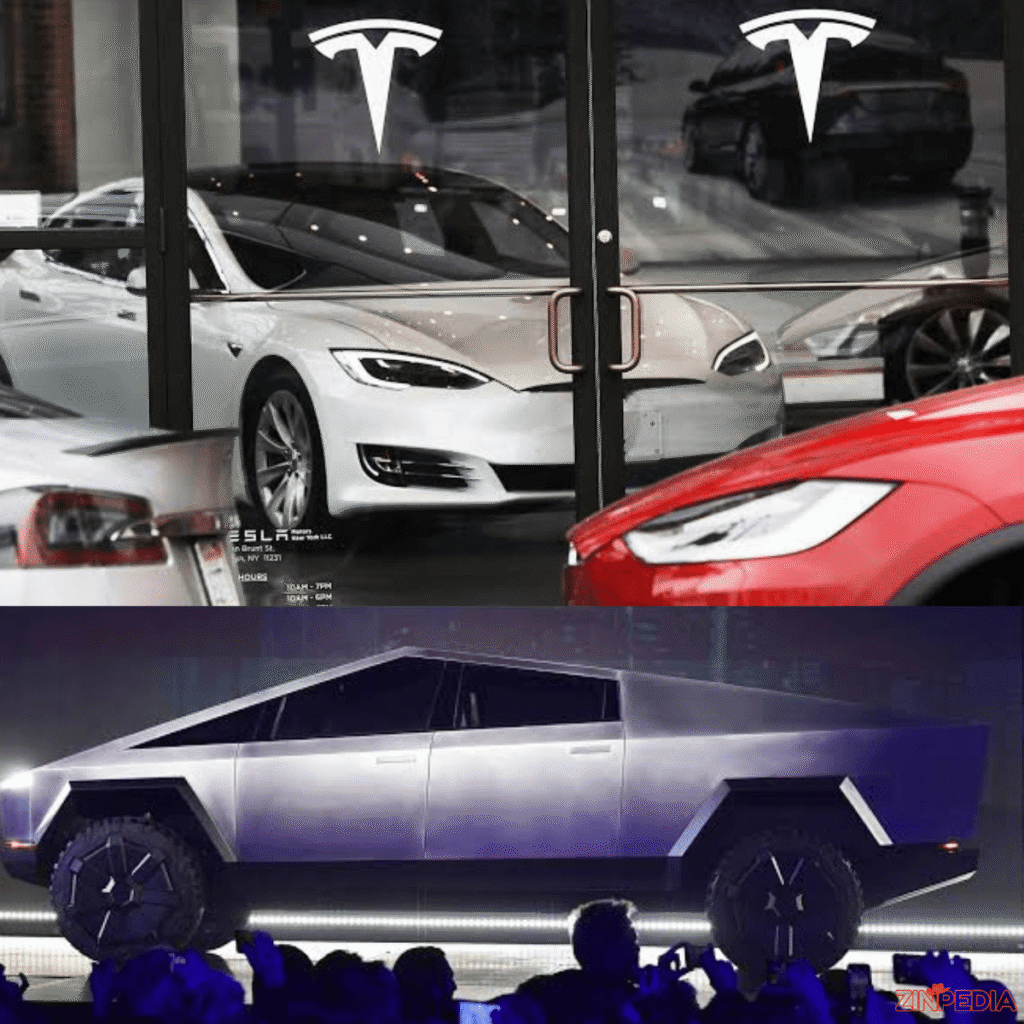
Still, the trend is strategically important. Tesla is no longer accurately described as a company whose results depend only on Model 3 and Model Y sales.
A more complete view of Tesla now includes:
- Electric vehicles
- Charging infrastructure
- Residential battery storage
- Utility-scale energy systems
- Autonomous ride-hailing
- Driver-assistance software
- Artificial-intelligence computing
- Humanoid robotics
Investors and readers who follow only vehicle deliveries may miss a meaningful part of the company’s development.
What Tesla News From September 2025 Revealed
People searching for Tesla news today September 2025 are often trying to understand the period that produced Tesla’s strongest quarterly delivery performance of that year.
Tesla reported the final third-quarter figures on October 2, shortly after September ended. The company produced 447,450 vehicles and delivered 497,099 during Q3 2025. It also deployed 12.5 GWh of energy-storage products. Tesla described both deliveries and storage deployments as quarterly records at the time.
The quarter was significant for several reasons.
First, almost half a million deliveries showed that Tesla could still generate a powerful demand and delivery surge. Model 3 and Model Y represented 481,166 deliveries, confirming that the company’s two mass-market vehicles remained central to its automotive business.
Second, energy deployments reached a new high, reinforcing the view that Tesla’s storage operation was becoming a major business rather than a secondary product category.
Third, the quarter created a demanding comparison for later results. A single record period can be influenced by delivery timing, inventory movement, incentives and end-of-quarter activity. The real test is whether performance can be repeated without placing too much pressure on pricing or profitability.
September 2025 should therefore be remembered as a high-output period, but not as proof that every challenge had disappeared.
During the same month, Tesla’s leadership and governance remained part of the news. Reuters reported that Tesla’s board continued to express confidence in Elon Musk as the company aimed to strengthen its position in artificial intelligence and robotics. Reuters also reported that Musk purchased close to $1 billion of Tesla shares, an action that contributed to increased investor attention.
For readers studying that period, the main lesson is clear: Tesla’s market story was already shifting from “How many cars can it sell?” to “Can vehicle sales finance a much larger AI, autonomy and robotics strategy?”
What Tesla News From December 2025 Showed
The phrase Tesla news today December 2025 relates to the final quarter of a year that produced mixed automotive and energy results.
Tesla’s official year-end figures were released on January 2, 2026. They showed that the company produced 434,358 vehicles and delivered 418,227 during the fourth quarter of 2025. That was below the record delivery level reached in Q3.
The energy business moved in the opposite direction. Tesla deployed 14.2 GWh of storage products in Q4, setting a new quarterly deployment record. Total energy-storage deployments reached 46.7 GWh for the full year.
For all of 2025, Tesla delivered 1,636,129 vehicles:
- Model 3 and Model Y: 1,585,279 deliveries
- Other models: 50,850 deliveries
- Total production: 1,654,667 vehicles
- Total deliveries: 1,636,129 vehicles
- Energy-storage deployments: 46.7 GWh
These figures revealed a company moving in two directions at once. The core automotive operation remained enormous, but yearly vehicle demand faced more pressure. At the same time, energy storage was reaching record deployment levels.
December 2025 also exposed supply-chain uncertainty. Reuters reported that South Korean battery-material producer L&F sharply reduced the stated value of a Tesla-related supply agreement. The report connected the reduction to lower material requirements and challenges surrounding 4680 battery demand and production.
One supplier agreement does not define Tesla’s entire battery strategy. However, the development demonstrated why production announcements should be evaluated against actual purchasing, manufacturing yield and commercial demand.
The wider conclusion from December was that Tesla’s future could not depend on one product or one quarter. The company needed to stabilize its vehicle business while converting energy, autonomy and robotics investments into reliable commercial results.
Tesla’s Shift From Automaker to AI and Robotics Company
Tesla continues to earn most of its business activity from vehicles and related services, but management increasingly presents the company as an AI, automation and manufacturing platform.
Its first-quarter 2026 update outlined preparations for Cybercab, Tesla Semi, Megapack 3 and Optimus production. Tesla also said it was expanding AI-compute capacity and developing battery-material operations, including lithium, cathode and LFP production.
The strategy has a clear logic.
Tesla already has factories, vehicle data, battery expertise, power electronics, software engineers and a global charging network. The company is attempting to use that foundation to develop:
- Autonomous transportation
- Subscription software
- Purpose-built robotaxis
- Utility energy systems
- Humanoid robots
- AI-training and inference hardware
- More vertically integrated battery production
The opportunity is large, but execution risk is equally important.
Robotaxis must operate safely and economically. Cybercab needs to reach meaningful production. Optimus must move from demonstrations to useful work. Battery investments need competitive costs and reliable output. AI spending must eventually produce revenue or measurable operational savings.
This is why Tesla news can produce extreme reactions. Supporters see a company building several major industries at the same time. Critics see expensive projects whose commercial timelines remain uncertain.
A balanced analysis should avoid both extremes. Tesla has demonstrated real manufacturing scale and has launched functioning products across vehicles, charging and battery storage. At the same time, future claims should be judged through measurable production, adoption, safety and financial performance.
What to Watch in Tesla’s Next Earnings Report
Tesla is scheduled to publish its Q2 2026 financial results after the market closes on July 22, followed by a management question-and-answer webcast.
The delivery result has already set a positive starting point, but the earnings report should answer more difficult questions.
Automotive profitability
Readers should examine whether higher deliveries improved automotive gross profit or whether discounts and incentives reduced the benefit.
Free cash flow and capital spending
Tesla is investing in AI infrastructure, batteries, energy factories, Cybercab, Semi and Optimus. Strong cash generation would make this expansion easier to fund.
Robotaxi operating progress
Updates on fleet size, paid miles, new markets and service reliability would be more useful than broad statements about future potential.
Energy-storage margins
The 13.5 GWh deployment figure was strong. Investors will want to know how much revenue and profit the energy operation generated.
Cybercab and Semi production
Tesla previously stated that Cybercab, Semi and Megapack 3 were scheduled for volume production beginning in 2026. Any change in production timing could influence expectations.
Optimus development
The company has discussed installing production lines for its humanoid robot. The most useful update would include production status, internal use cases, costs and evidence of dependable operation.
Demand after the Q2 rebound
A strong quarter does not guarantee a strong second half. Order trends, regional demand, inventory and pricing will help show whether the recovery is sustainable.
Frequently Asked Questions
What is the biggest Tesla news today?
The leading update is Tesla’s Q2 2026 delivery rebound. The company delivered 480,126 vehicles and deployed 13.5 GWh of energy-storage products. Tesla is also expanding its robotaxi operation, including a reported launch in Miami.
When will Tesla report its next financial results?
Tesla is scheduled to report its second-quarter 2026 financial results on July 22, 2026, after the market closes.
How many vehicles did Tesla deliver in Q2 2026?
Tesla delivered 480,126 vehicles in Q2 2026. Model 3 and Model Y accounted for 467,762 deliveries.
Is Tesla’s robotaxi available everywhere?
No. Tesla has expanded robotaxi operations into selected U.S. cities, but availability, service areas and operating conditions remain limited. Reuters testing in Texas found long waits and inconsistent availability during the early expansion period.
Is Tesla FSD fully autonomous?
Tesla labels the customer product FSD (Supervised). It requires active driver supervision and does not make the vehicle fully autonomous.
What happened to Tesla in September 2025?
The quarter ending in September produced a record 497,099 vehicle deliveries and 12.5 GWh of energy-storage deployments. Tesla published the final figures on October 2, 2025.
What happened to Tesla in December 2025?
The fourth quarter ended with 418,227 vehicle deliveries and a record 14.2 GWh of energy-storage deployments. For the full year, Tesla delivered 1,636,129 vehicles and deployed 46.7 GWh of storage.
Is Tesla still mainly an electric-car company?
Vehicle sales remain central to Tesla’s business, but the company is investing heavily in robotaxis, energy storage, AI infrastructure, battery manufacturing and humanoid robots.
Conclusion
The current Tesla story is neither a simple comeback nor a simple decline.
Q2 2026 deliveries showed a powerful recovery from the first quarter, while the energy-storage result demonstrated that Tesla is building meaningful scale outside passenger vehicles. Robotaxi operations are expanding, but early service limitations show that launching in a city is not the same as achieving reliable commercial scale.
The historical picture adds useful context. September 2025 produced record vehicle deliveries, while December’s quarter ended with weaker automotive volume but record battery-storage deployments. Together, those periods illustrate why one headline cannot explain Tesla’s full position.
The next decisive update will arrive with Tesla’s Q2 financial report. The most important questions will concern profitability, cash flow, robotaxi execution, energy margins and production progress across Cybercab, Semi and Optimus.
For readers following Tesla news today, the best approach is to separate confirmed performance from future promises. Deliveries, paid service usage, margins, cash generation and production output provide a clearer picture than speculation alone.
Explore More Helpful Articles– Visit Now