
Boiling an egg sounds simple: put an egg in water and cook it. However, small differences in timing can completely change the result.
Cook an egg for too little time, and the white may remain loose. Leave it in hot water too long, and the yolk may become dry, chalky, or surrounded by a green-gray ring. Even perfectly cooked eggs can be frustrating when the shell sticks and removes pieces of the white.
The good news is that consistent boiled eggs do not require special equipment. You only need eggs, water, a saucepan, a timer, and preferably a bowl of ice water.
For fully cooked large eggs, one dependable method is to cover them with cold water, bring the water just to a boil, remove the pan from the heat, cover it, and let the eggs stand for approximately 12 minutes. Medium eggs need around 9 minutes, while extra-large eggs may need about 15 minutes.
This guide explains how to boil eggs, how long to cook each yolk style, and how to avoid the most common mistakes.
1. How Long Should You Boil Eggs?
The correct cooking time depends on the yolk texture you want.
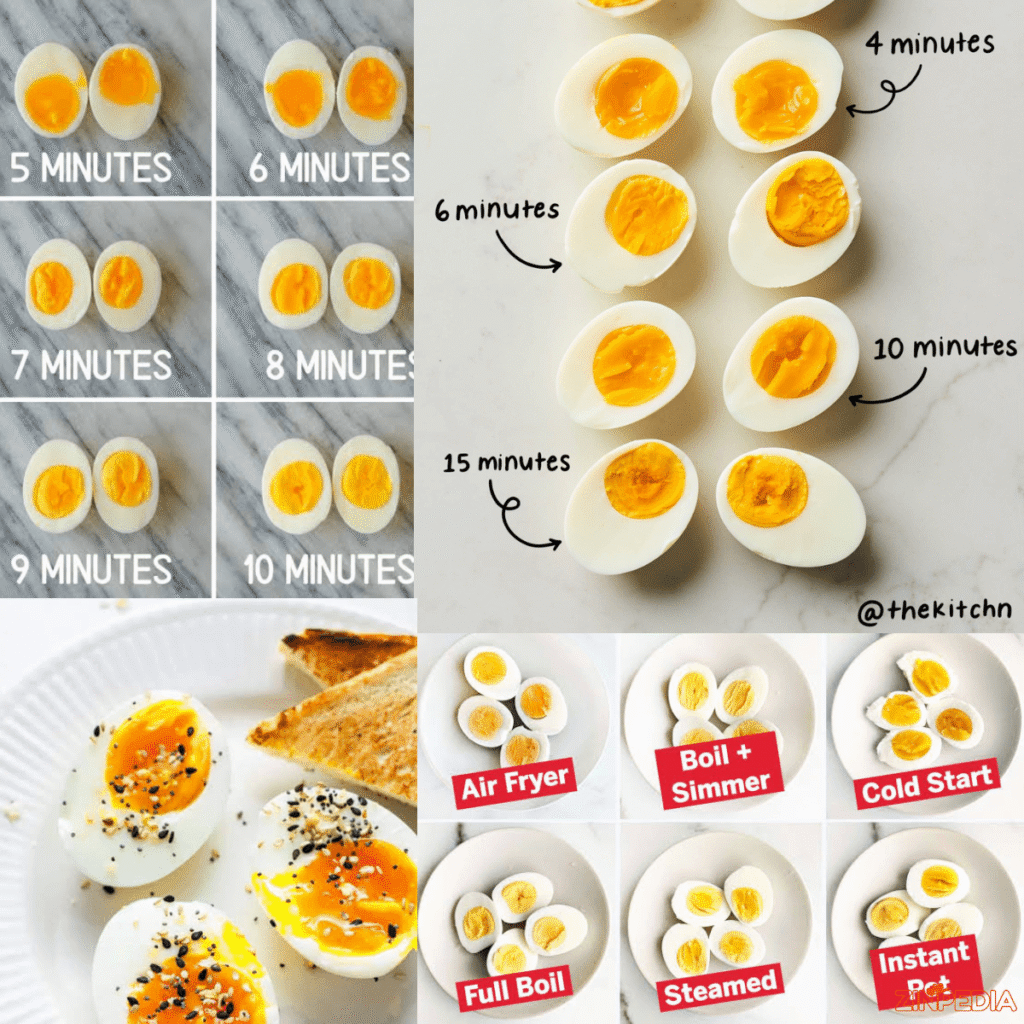
When placing large, refrigerated eggs into water that is already gently boiling, use this approximate guide:
| Cooking time | Egg-white texture | Yolk texture |
|---|---|---|
| 6 minutes | Set but tender | Warm and runny |
| 7 minutes | Fully set | Thick, soft center |
| 8 minutes | Firm | Jammy and creamy |
| 9 minutes | Firm | Mostly set with a softer middle |
| 10 minutes | Firm | Fully set but still moist |
| 11–12 minutes | Fully firm | Classic hard-boiled yolk |
| 13 minutes or more | Very firm | Drier and more likely to overcook |
These times are practical starting points rather than universal laws. The final result can change according to:
- Egg size
- Starting temperature
- Number of eggs
- Pan size
- Water quantity
- Stove strength
- Elevation above sea level
- How quickly the eggs are cooled
At higher elevations, water boils at a lower temperature, so eggs cooked in boiling water may require additional time. The USDA confirms that hard-cooked and poached eggs can take longer at high altitude.
The fastest answer for hard-boiled eggs
For a classic firm yolk, cook large eggs for approximately 11 to 12 minutes after carefully lowering them into gently boiling water.
Alternatively, use the gentler hot-water method:
- Cover the eggs with cold water.
- Bring the water just to a boil.
- Remove the saucepan from the heat.
- Cover it.
- Leave large eggs in the hot water for approximately 12 minutes.
- Transfer them to cold or ice water.
The American Egg Board recommends approximately 9 minutes for medium eggs, 12 minutes for large eggs, and 15 minutes for extra-large eggs when using this method.
Which cooking method is better?
Both methods work, but they offer slightly different benefits.
Starting with cold water is gentle and reduces sudden temperature changes that may crack the shells. It is especially useful for making a large batch of fully cooked eggs.
Starting with boiling water gives you more direct control over yolk texture. It is often better when you want soft, jammy, or medium-boiled eggs.
The most important rule is to use the same method each time. Once you find the timing that works with your stove, pan, and preferred egg size, repeat it consistently.
2. How to Hard Boil Eggs: A Foolproof Step-by-Step Method
This method is designed for firm whites and fully cooked yellow yolks without unnecessary boiling.
What you need
- 6 to 12 large eggs
- A saucepan with a lid
- Cold water
- A bowl of ice water
- A slotted spoon or kitchen tongs
Step 1: Place the eggs in one layer
Put the eggs in the bottom of the saucepan in a single layer.
Avoid stacking them when possible. Eggs that move around or hit one another may be more likely to crack.
Use a saucepan that holds the eggs comfortably without leaving too much space.
Step 2: Cover the eggs with cold water
Add enough cold water to cover the eggs by approximately 1 inch.
Using too little water may cause the temperature to fall too quickly after the pan is removed from the stove. Too much water may take longer to heat and can change the timing.
Step 3: Bring the water just to a boil
Place the saucepan over high heat.
Watch for the water to reach a full boil. Once it does, immediately remove the pan from the burner.
Do not continue violently boiling the eggs. A harsh rolling boil can cause them to strike the pan and may produce firmer, more rubbery whites.
The recommended hot-water method uses boiling water only to create enough stored heat. The covered eggs then cook gently after the saucepan is removed from the burner.
Step 4: Cover the pan and start the timer
Place the lid on the saucepan.
Let the eggs remain in the hot water for:
- 9 minutes for medium eggs
- 12 minutes for large eggs
- 15 minutes for extra-large eggs
Do not lift the lid repeatedly because releasing heat may affect the result.
Step 5: Prepare an ice bath
While the eggs cook, fill a large bowl with cold water and ice.
The bowl should contain enough water to surround all the eggs.
Step 6: Cool the eggs immediately
When the timer ends, drain the hot water carefully or use a slotted spoon to move the eggs directly into the ice bath.
Let them cool for at least 5 to 10 minutes.
Rapid cooling has three important benefits:
- It stops continued cooking.
- It reduces the risk of a green ring around the yolk.
- It helps the cooked egg pull slightly away from the shell.
Step 7: Peel or refrigerate
Peel the eggs once they have cooled completely, or dry them and store them in the refrigerator with their shells intact.
For meal preparation, leaving the shells on generally helps protect the eggs and prevents the exposed whites from drying out.
3. How to Make Soft, Jammy, and Medium-Boiled Eggs
The cold-water method is excellent for hard-cooked eggs, but boiling-water timing gives more control when you want a softer yolk.
Step-by-step boiling-water method
- Fill a saucepan with enough water to cover the eggs.
- Bring the water to a gentle boil.
- Lower the refrigerated eggs into the water with a spoon.
- Reduce the heat enough to maintain a gentle boil.
- Start the timer immediately.
- Transfer the eggs to ice water when the timer finishes.
Lower each egg slowly. Dropping a cold egg directly onto the bottom of a hot pan may crack the shell.
Six-minute egg: runny yolk
Cook a large egg for approximately 6 minutes for:
- A set but tender white
- A liquid or flowing center
- A warm, rich yolk
This style works well with toast, ramen, rice, noodles, or breakfast bowls.
A soft-boiled egg may not reach the same level of doneness as a fully cooked egg. The American Egg Board notes that soft-boiled eggs may not reach a sufficient temperature to be considered fully safe. People at greater risk from foodborne illness should choose fully cooked eggs or pasteurized shell eggs.
Seven- to eight-minute egg: jammy yolk
Cook for approximately 7 to 8 minutes for:
- A fully set white
- A creamy outer yolk
- A thick, soft center
This texture is often called “jammy” because the yolk is neither liquid nor completely firm.
Jammy eggs are useful for:
- Salads
- Grain bowls
- Ramen
- Avocado toast
- Sandwiches
- Roasted vegetables
Nine- to ten-minute egg: medium yolk
Cook for approximately 9 to 10 minutes for a yolk that is mostly or completely set but still moist.
This is a good choice for people who dislike runny yolks but find traditional hard-boiled eggs too dry.
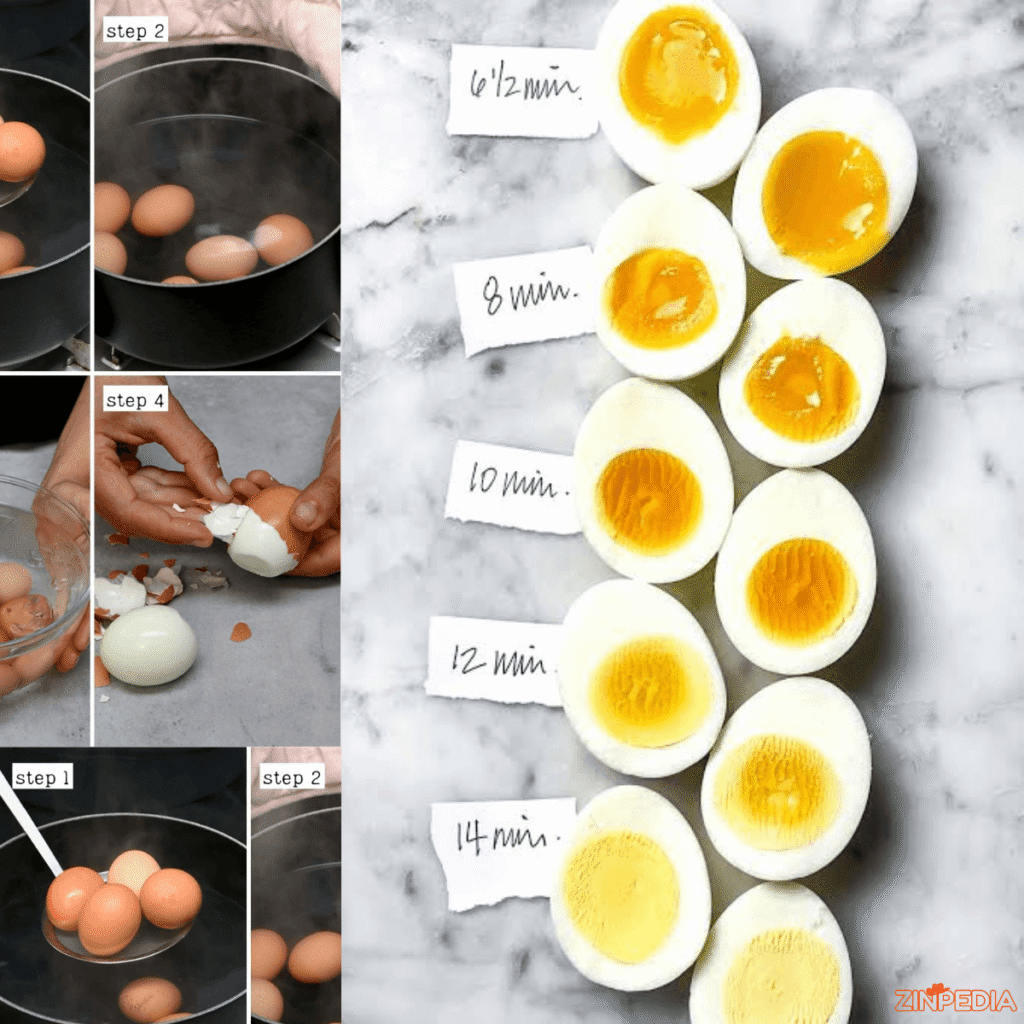
Eleven- to twelve-minute egg: hard-boiled
Cook for approximately 11 to 12 minutes for:
- A firm white
- A completely set yolk
- A texture suitable for slicing or chopping
Hard-boiled eggs work well in:
- Egg salad
- Deviled eggs
- Potato salad
- Green salads
- Sandwiches
- Lunch boxes
- Breakfast meal preparation
For food safety, the FDA advises cooking eggs until both the yolk and white are firm. Recipes served with raw or undercooked eggs should use pasteurized shell eggs or pasteurized egg products.
4. How to Peel Boiled Eggs Easily
A perfectly cooked egg can still feel unsuccessful when half the white sticks to the shell.
No technique guarantees that every egg will peel perfectly, but several steps make the process easier.
Cool the eggs completely.
Warm eggs can be peeled, but fully chilled eggs are usually easier to handle.
Leave them in ice water until the entire egg feels cold.
Start at the wider end.
The wider end normally contains an air pocket.
Tap that end gently against a hard surface, then crack the shell across the rest of the egg.
Starting where the air pocket sits may give you more room to get under the thin membrane.
Roll the egg gently.
After cracking the wide end, roll the egg gently under your palm to create small cracks across the shell.
Do not press hard enough to break the egg white.
Peel under running water
Hold the egg under cool running water or peel it inside a bowl of water.
Water can move underneath the shell membrane and help separate it from the cooked white.
Use slightly older eggs.
Very fresh eggs can be more difficult to peel. The American Egg Board suggests buying and refrigerating eggs about a week in advance when easy peeling is especially important.
You do not need to leave the eggs at room temperature. Keep them refrigerated until you are ready to cook.
Try steaming
Steaming is another useful option for easy-peel eggs.
Place a steamer basket over boiling water, add the eggs carefully, cover the pan, and steam large eggs for approximately 12 minutes. Cool them immediately afterward. The American Egg Board recommends a similar 12-minute steaming time for large eggs.
Do not pierce the shell.
Some older methods suggest making a small hole in the shell before boiling.
Current egg-safety guidance does not recommend piercing shells because an unsterilized needle or tool could introduce bacteria.
5. Common Boiled-Egg Problems and How to Fix Them
The yolk has a green-gray ring.
A green ring usually means the egg was overcooked or cooled too slowly.
It forms through a reaction involving sulfur in the egg white and iron in the yolk. The color may look unattractive, but the USDA describes it as a result of overcooking rather than a sign that the egg is automatically unsafe.
To prevent it:
- Avoid boiling eggs longer than necessary.
- Use a timer.
- Transfer the eggs to ice water immediately.
- Do not leave cooked eggs sitting in hot water after the timer finishes.
The egg white feels rubbery.
Rubbery whites usually result from excessive heat or cooking time.
Use a gentle boil rather than violent bubbling. For hard-boiled eggs, consider the covered hot-water method instead of continuously boiling them.
The yolk is still soft.
The egg may have been too large, too cold, or removed too early.
Return an unpeeled egg to gently simmering water for another 1 to 2 minutes. For the next batch, add a minute to your normal timing.
The shell cracked during cooking.
Eggs may crack because of sudden temperature change or movement inside the saucepan.
Reduce the risk by:
- Lowering eggs gently into hot water
- Avoiding violent boiling
- Using enough water
- Keeping eggs in a single layer
- Not overcrowding the saucepan
The shell will not come off cleanly.
The egg may be extremely fresh or insufficiently cooled.
Try peeling under running water and sliding a teaspoon gently between the membrane and the egg white.
A watery liquid appears inside the shell.
A small amount of moisture can collect between the shell and cooked egg. This is not unusual after hard cooking.
However, discard any egg that develops an unpleasant odor, unusual slime, or other clear signs of spoilage.
The egg spins differently.
A fully cooked egg usually spins smoothly because its contents are solid.
A raw egg often wobbles because the liquid inside continues moving. This can help distinguish cooked eggs from raw ones, but labeling the carton or storage container is more reliable.
6. How to Store Hard-Boiled Eggs Safely
Correct storage is just as important as correct cooking.
Refrigerate them within two hours.
Hard-cooked eggs should be refrigerated within two hours after cooking. Do not leave them on the counter throughout the day or overnight.
If eggs are served at a picnic, party, or buffet, keep them cold using ice or insulated containers.
Use them within one week.
The USDA recommends using refrigerated hard-cooked eggs within one week.
Write the cooking date on the storage container so you do not need to guess later.
Store eggs at 40°F or below
Keep eggs in the main section of the refrigerator rather than in a warm door compartment.
Store them in:
- Their original carton
- A covered food container
- A labeled meal-preparation box
Keep the shells on when possible.
Unpeeled eggs generally retain moisture better and are easier to store.
Peel them close to the time you plan to eat or use them. When storing peeled eggs, place them in a sealed container to prevent drying and refrigerator odors.
Do not freeze whole hard-boiled eggs.
Freezing can produce unpleasant, rubbery egg whites. USDA storage guidance lists hard-cooked eggs as a food that does not freeze well.
Avoid reheating whole eggs in the microwave.
A whole cooked egg can build pressure and burst in a microwave, even after the shell has been removed.
For a warm egg, cut it into pieces and heat it gently as part of another dish.
7. Frequently Asked Questions and Final Takeaway
Boiling an egg hard, how long does it take?
For instance, large eggs usually take around 11 to 12 minutes in a gently bubbling pot of water.
The method using covered hot water: boil cold water and eggs, remove the pan from heat, cover it, and let large eggs sit for approximately 12 minutes.
Do you put eggs into hot or cold water?
Both methods work.
Cold water is gentle and dependable for hard-boiled eggs. Hot water gives you more control over soft, jammy, and medium yolks.
Should the water keep boiling?
Not necessarily.
For the covered hot-water method, remove the pan from the burner as soon as the water reaches a boil. The trapped heat will continue cooking the eggs gently.
For the timed boiling-water method, maintain a gentle boil rather than aggressive bubbling.
How long should I boil four eggs?
The cooking time remains roughly the same whether you cook four eggs or six eggs, provided the pan is not overcrowded and enough water surrounds them.
A very large batch may reduce the water temperature and may need a small adjustment.
How long should I boil eggs for egg salad?
Cook large eggs for approximately 11 to 12 minutes.
The yolks should be completely firm, so they mash smoothly with mayonnaise, mustard, herbs, or other ingredients.
How long should I boil eggs for ramen?
For a jammy ramen egg, cook large eggs for approximately 7 to 8 minutes, then cool them immediately in ice water.
Use pasteurized eggs or fully cook the yolks when serving people at greater risk of foodborne illness.
Can I boil eggs straight from the refrigerator?
Yes.
The cooking times in this guide assume refrigerated eggs. Lower cold eggs carefully into hot water to reduce cracking.
Does adding salt make eggs easier to peel?
Salt may season water or help egg white set when a shell cracks, but it does not guarantee easy peeling.
Cooling, egg freshness, and peeling technique usually make a greater difference.
Does vinegar make eggs easier to peel?
A little vinegar can help firm egg white that leaks from a crack, but it is not a guaranteed peeling solution.
Too much vinegar may affect the shell surface and smell.
How do I know whether a hard-boiled egg has gone bad?
Discard an egg that has:
- A strong rotten smell
- A slimy surface
- Unusual mold
- Suspicious discoloration unrelated to a normal green yolk ring
- Been left unrefrigerated for too long
A sulfur-like smell immediately after peeling can occur in an overcooked egg, but a strong rotten odor is a warning sign.
Final takeaway
The easiest way to make reliable hard-boiled eggs is to place them in one layer, cover them with cold water, bring the water just to a boil, remove the pan from the heat, and leave large eggs covered for approximately 12 minutes.
Then cool them immediately in ice water.
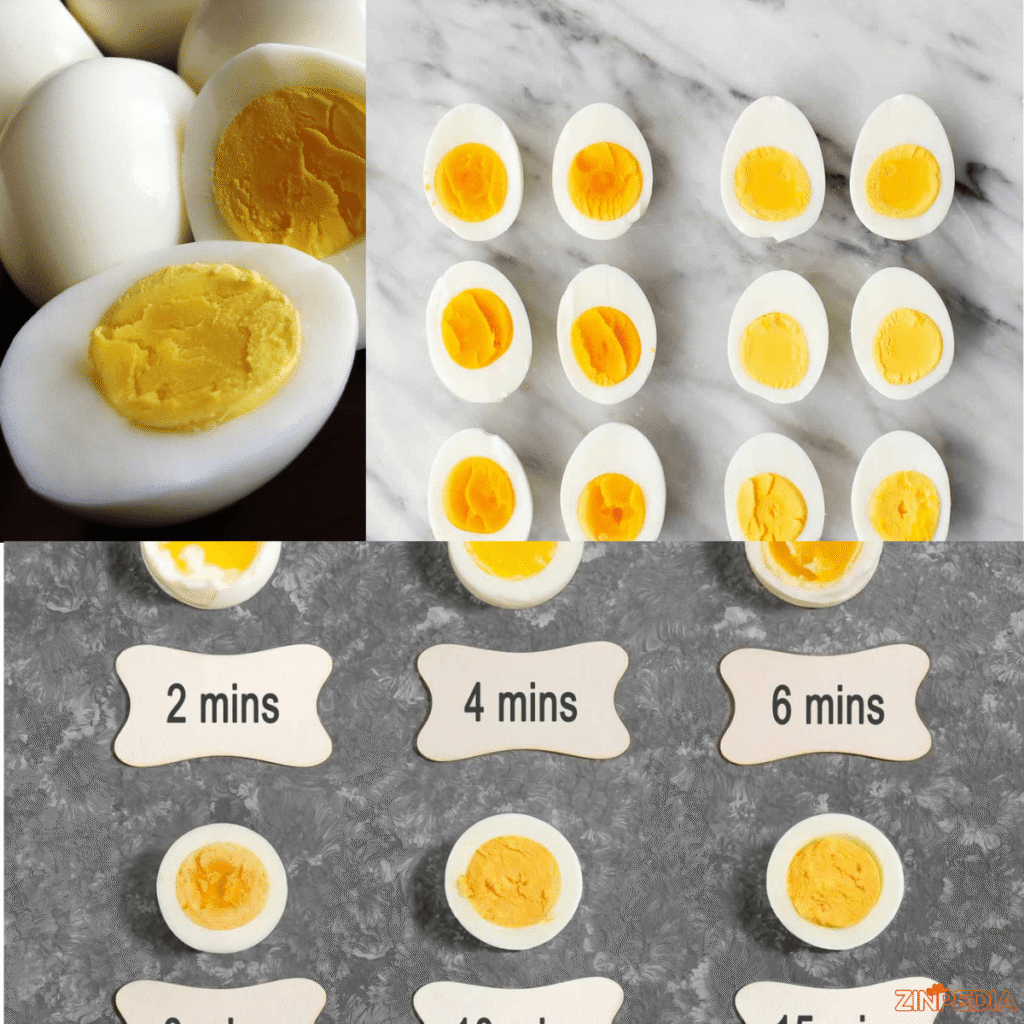
For other yolk textures, use these simple starting times:
- 6 minutes: runny
- 7–8 minutes: soft or jammy
- 9–10 minutes: medium
- 11–12 minutes: hard-boiled
Use a timer, cool the eggs quickly, and adjust by one minute when needed for your egg size, stove, or elevation.
Finally, refrigerate cooked eggs within two hours and use them within one week. With a consistent method and proper cooling, you can produce tender whites, evenly cooked yolks, and shells that are much easier to remove.
Explore More Helpful Articles– Visit Now