
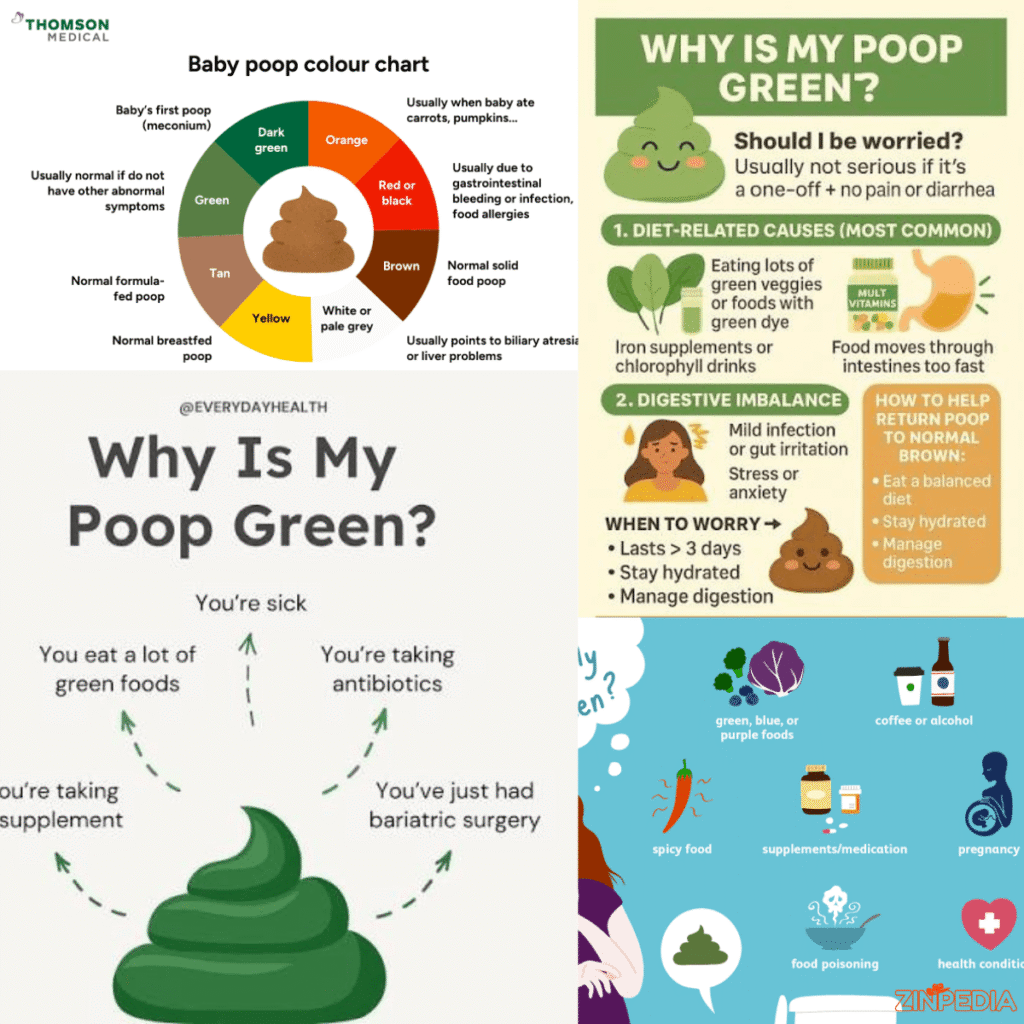
Have you looked into the toilet and suddenly wondered, “Why is my poop green?”
The unusual color can be surprising, especially when your bowel movements are normally brown. Fortunately, green poop is usually connected to something harmless, such as green vegetables, food coloring, iron supplements, or food moving through your digestive system faster than usual.
However, green stool can sometimes appear with diarrhea, infection, medication side effects, or another digestive problem. The color alone rarely reveals the exact cause. The surrounding details—such as how long it lasts, what you recently ate, and whether you have pain, fever, vomiting, or blood in your stool—are more important.
This guide explains the most common reasons for green poop, when you should monitor it, and when it is safer to contact a healthcare professional.
Medical note: This article provides general health information and is not a substitute for diagnosis or treatment from a qualified healthcare professional.
Quick Answer: Why Is My Poop Green?
Green poop usually happens for one of two reasons:
- You ate something containing green, blue, purple, or dark food coloring.
- Stool passed through your intestines too quickly for its natural green bile pigments to turn completely brown.
Other possible causes include iron supplements, certain medications, diarrhea, food poisoning, intestinal infections, and digestive conditions that increase bowel movement speed.
Green stool that appears once or twice without other symptoms is usually not a reason to panic. Mayo Clinic notes that green stool is rarely a cause for concern and is often related to food, food dyes, medicines, iron supplements, or diarrhea.
What Makes Normal Poop Turn Green?
Understanding why poop changes color begins with bile.
Bile is a yellow-green digestive fluid produced by your liver and stored in your gallbladder. It helps your body digest fats. As food moves through your digestive system, bile mixes with it and gradually changes color through chemical and bacterial processes.
By the time stool leaves the body, these pigments have normally changed from green to brown.
When waste moves through the large intestine too quickly, bile may not have enough time to complete this color transformation. The stool may therefore remain green or greenish-brown. This commonly happens during diarrhea or any condition that speeds up intestinal movement.
The final color of your stool can also be affected by:
- Natural pigments in food
- Artificial food dyes
- Medicines and supplements
- The amount of bile in the stool
- How quickly food passes through your intestines
- Changes in your intestinal bacteria
- Bleeding or digestive disease
Color is only one part of evaluating a bowel movement. Consistency, frequency, smell, pain, and other symptoms often provide more useful information.
7 Common Reasons Your Poop Is Green
1. You Ate Green Vegetables
Green vegetables are among the most common and harmless causes of green poop.
Foods such as spinach, kale, broccoli, collard greens, parsley, and other leafy vegetables contain chlorophyll, the pigment that gives plants their green color. Eating a large amount may temporarily give your stool a green or dark green appearance.
This is especially likely after:
- A large spinach or kale salad
- Green smoothies
- Vegetable juices
- Meals containing several servings of leafy greens
- Chlorophyll-rich powders or drinks
You usually do not need to stop eating nutritious green vegetables. The color should return to normal after your body finishes processing the food.
2. You Consumed Artificial Food Coloring
Brightly colored foods and drinks can change the appearance of your stool.
Green dye may produce obviously green poop, but blue or purple coloring can also mix with yellow-green bile and create a green result. The food itself does not always need to look green.
Common sources include:
- Cake frosting
- Cupcakes and decorated desserts
- Candy
- Ice pops
- Sports drinks
- Colored cereals
- Gelatin desserts
- Blue or purple beverages
- Holiday-themed foods
- Black icing made with concentrated dye
Food coloring may affect your stool for one or two bowel movements. Think about everything you ate over the previous 24 to 72 hours rather than only your most recent meal.
Cleveland Clinic explains that unusual stool colors are commonly related to food, including leafy vegetables and dyed products.
3. You Are Taking Iron or Chlorophyll Supplements
Iron supplements can make stool look dark green, deep green, or nearly black. This is a well-recognized effect and is not usually dangerous by itself.
Iron may be found in:
- Prescription iron tablets
- Over-the-counter iron supplements
- Multivitamins
- Prenatal vitamins
- Iron-fortified nutritional products
Liquid chlorophyll and chlorophyll supplements may also turn stool green. MedlinePlus reports that swallowed chlorophyll can cause green stool and may sometimes be associated with loose bowel movements or stomach cramps.
Do not stop a prescribed iron supplement only because your stool changed color. Speak with the prescribing clinician if you also develop severe constipation, persistent abdominal pain, vomiting, or another concerning reaction.
Remember that iron can make stool very dark. Truly black, sticky, tar-like stool may indicate bleeding higher in the digestive tract and should not automatically be blamed on a supplement, especially when accompanied by weakness, dizziness, abdominal pain, or vomiting blood.
4. Food Is Moving Through Your Intestines Too Quickly
Green stool commonly appears during diarrhea because waste moves through the colon too quickly.
The bile pigments remain green because there is not enough time for them to turn brown. Your bowel movements may be:
- Loose or watery
- More frequent than usual
- Difficult to control
- Accompanied by urgency
- Green, yellow-green, or greenish-brown
A single episode may follow a rich meal, stress, a temporary food reaction, or a minor stomach illness. Repeated watery bowel movements require closer attention because diarrhea can cause fluid and electrolyte loss.
Diarrhea is generally described as passing loose or watery stool three or more times per day, or more often than is normal for you. Acute diarrhea commonly resolves within a week, although the need for medical care depends on its severity and associated symptoms.
5. You Have a Stomach Infection or Food Poisoning
Green diarrhea can occur when a viral, bacterial, or parasitic infection increases intestinal movement.
Possible accompanying symptoms include:
- Stomach cramps
- Nausea
- Vomiting
- Fever
- Loss of appetite
- Fatigue
- Watery diarrhea
- Sudden urgency
- Dehydration
Food poisoning may begin after eating contaminated food or drinking contaminated water. An intestinal infection may also spread from another person, particularly when hand hygiene is poor.
The green color itself does not identify which germ caused the illness. A clinician may use your symptoms, travel history, recent meals, medication use, and sometimes a stool test to determine the cause. Stool testing may be considered when a bacterial or parasitic cause is suspected.
Seek prompt medical advice when diarrhea comes with blood, pus, severe abdominal pain, high fever, repeated vomiting, confusion, or dehydration.
6. A Medicine Is Affecting Your Digestion
Some medicines can change stool color directly or cause diarrhea that makes stool appear green.
Possible examples include:
- Antibiotics
- Iron-containing medicines
- Laxatives
- Medicines that speed up intestinal movement
- Treatments that disturb normal intestinal bacteria
Antibiotics can sometimes cause mild diarrhea by altering the balance of bacteria in the digestive tract. More serious antibiotic-associated diarrhea is also possible.
Contact a healthcare professional when diarrhea begins during or after antibiotic use and is severe, persistent, bloody, or accompanied by fever or significant abdominal pain. Do not stop a prescribed medicine without medical guidance unless you are having a serious reaction that requires emergency attention.
7. An Ongoing Digestive Problem Is Causing Frequent Diarrhea
Green poop that keeps returning may be connected to an underlying condition that increases intestinal movement or causes repeated diarrhea.
The color does not diagnose a specific disease. Doctors will usually consider the complete pattern, including:
- How long the change has lasted
- How frequently you have diarrhea
- Whether you are losing weight
- Whether symptoms happen after particular foods
- Whether there is blood or mucus
- Whether you have nighttime symptoms
- Whether you have recently traveled
- Whether you started a new medicine
- Whether you have a history of digestive disease
Persistent diarrhea lasts longer than two weeks, while chronic diarrhea lasts at least four weeks. Long-lasting symptoms may require a medical history, physical examination, blood tests, or stool tests.
Do not assume that recurring green stool means you have a serious illness. However, repeated changes without an obvious dietary explanation deserve professional evaluation.
What Green Poop Means When It Comes With Other Symptoms
The combination of stool color and other symptoms can provide more useful clues than color alone.
| What you notice | A possible explanation | Recommended response |
|---|---|---|
| Green stool after spinach or kale | Natural plant pigment | Monitor; no treatment is usually needed |
| Green stool after blue or green candy | Artificial food coloring | Wait for the dye to pass |
| Dark green stool after iron tablets | Supplement-related color change | Continue as directed unless your clinician advises otherwise |
| Green, loose stool | Fast intestinal movement | Drink fluids and monitor symptoms |
| Green diarrhea with vomiting or cramps | Infection or food poisoning may be possible | Focus on hydration and contact a clinician if severe |
| Green stool with high fever | Infection or inflammation may be possible | Seek medical advice promptly |
| Green stool with red blood or pus | Bleeding, infection, or inflammation may be present | Obtain urgent medical care |
| Very dark, sticky, tar-like stool | Possible upper digestive bleeding | Seek urgent medical evaluation |
| Green stool with dizziness and little urination | Possible dehydration | Seek prompt medical care |
| Green stool lasting several days without explanation | Dietary, medication, or digestive cause | Contact a healthcare professional |
This table cannot provide a diagnosis. Its purpose is to help you decide whether simple monitoring is reasonable or medical evaluation is needed.
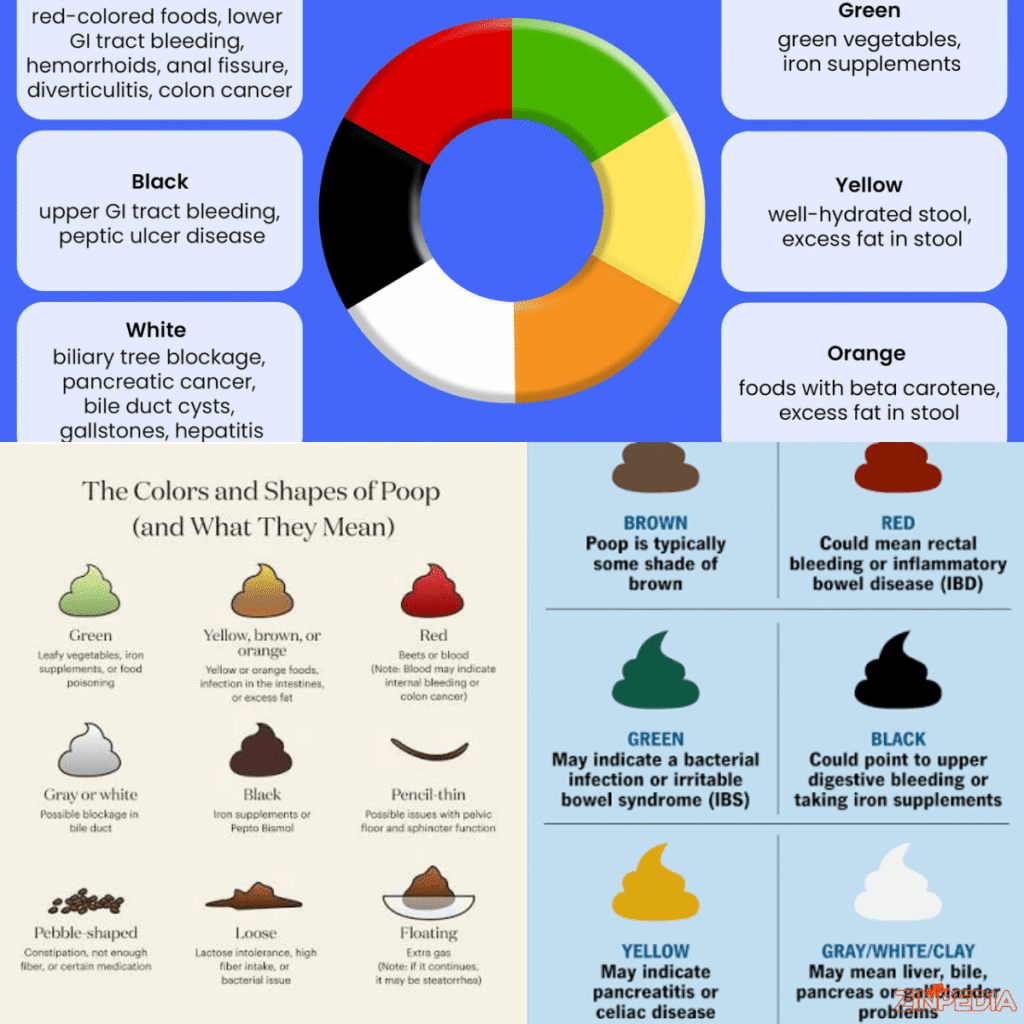
Is Green Poop Normal in Babies?
Green poop can be normal in babies, particularly during the newborn period.
A newborn’s first stool is called meconium. It is typically thick, sticky, and dark green or nearly black. Breastfed babies may have yellow-green bowel movements, while formula-fed babies may have yellow, tan, brown, or greenish stool.
Iron-fortified formula and iron supplements can also make a baby’s stool dark green. Mayo Clinic states that green baby poop can be typical and is often not a cause for concern.
Parents and caregivers should pay attention to the baby’s overall condition rather than color alone.
Contact a pediatric healthcare professional promptly if a baby has:
- Repeated watery diarrhea
- Poor feeding
- Frequent vomiting
- Fever
- Blood in the stool
- White or clay-colored stool
- A swollen abdomen
- Unusual sleepiness
- No tears when crying
- Fewer wet diapers
- A dry mouth
- Sunken eyes or cheeks
Children can become dehydrated more quickly than healthy adults. NIDDK recommends prompt medical care for a child with diarrhea lasting more than 24 hours or diarrhea accompanied by significant fever, severe pain, blood, pus, black stool, or dehydration symptoms.
What Should You Do If Your Poop Is Green?
If you otherwise feel well, start by reviewing your recent diet, supplements, and medications.
Check what you ate
Think back over the previous two or three days. Look for:
- Spinach, kale, or green smoothies
- Blue, purple, black, or green frosting
- Colored drinks or candy
- Large amounts of herbs
- Foods containing concentrated coloring
Stool color does not always change immediately after eating the responsible food.
Review supplements and medicines
Check whether you recently started:
- Iron
- A multivitamin
- A prenatal vitamin
- Liquid chlorophyll
- Antibiotics
- Laxatives
- Another new medicine
Ask a pharmacist or healthcare professional whether stool changes are a known effect. Do not discontinue an essential prescription solely because of green stool.
Drink enough fluids
Green stool accompanied by diarrhea can lead to dehydration. Drink water and other suitable fluids regularly. An oral rehydration solution may be useful when diarrhea causes significant fluid loss because it replaces water and electrolytes.
Possible dehydration symptoms include:
- Excessive thirst
- Dry mouth
- Dark urine
- Urinating less often
- Weakness
- Dizziness
- Lightheadedness
- Unusual tiredness
Severe dehydration requires urgent medical treatment.
Monitor the pattern
Record:
- When the green stool started
- How many bowel movements you have
- Whether the stool is formed or watery
- Foods eaten during the previous days
- New supplements or medications
- Fever, pain, nausea, vomiting, or blood
- Any recent travel
- Whether other people who ate the same food are ill
This information can help a clinician identify the likely cause.
Be careful with anti-diarrheal medicine
Some adults can use over-the-counter diarrhea medicine for uncomplicated acute diarrhea. However, these medicines may not be suitable for people with fever or bloody stool and generally should not be given to infants or children without professional guidance. NIDDK advises seeking care if diarrhea worsens or lasts more than two days while using over-the-counter treatment.
When Should You Worry About Green Poop?
An isolated green bowel movement is usually harmless. The situation becomes more concerning when the change persists or appears with significant symptoms.
Contact a healthcare professional if:
- Green stool continues for more than a few days
- You cannot identify a food, dye, supplement, or medicine that explains it
- Diarrhea lasts more than two days as an adult
- A child’s diarrhea lasts more than 24 hours
- The problem keeps returning
- You are losing weight without trying
- You have ongoing abdominal discomfort
- Your bowel habits have changed significantly
- Symptoms started during or after antibiotics
Mayo Clinic recommends contacting a healthcare professional when green stool lasts for more than a few days.
Seek urgent medical care when you have:
- Red blood in your stool
- Black, sticky, or tar-like stool
- Pus in the stool
- Severe abdominal or rectal pain
- Frequent vomiting
- A high fever
- Confusion or unusual lack of energy
- Fainting or severe dizziness
- Very little or no urination
- An inability to keep fluids down
- Signs of serious dehydration
These symptoms matter more than the green color itself. NIDDK identifies severe pain, frequent vomiting, black or bloody stool, pus, mental-status changes, and dehydration as reasons to seek prompt medical help for diarrhea.
Frequently Asked Questions
Is green poop a sign of cancer?
Green poop by itself is not a typical or reliable sign of cancer. It is far more commonly related to food coloring, green vegetables, iron, or rapid intestinal movement.
However, unexplained weight loss, persistent abdominal pain, recurring bleeding, black stool, ongoing diarrhea or constipation, and a lasting change in bowel habits should be evaluated by a healthcare professional.
Can stress cause green poop?
Stress can affect intestinal movement in some people. When stress causes food to move through the digestive system more quickly, the stool may remain green because bile has not had enough time to turn brown.
Stress should not automatically be assumed to be the cause when you also have fever, blood, severe pain, dehydration, or persistent diarrhea.
Why is my poop dark green?
Dark green poop often follows iron supplements, iron-fortified foods, dark leafy vegetables, or concentrated food coloring. It may also appear when bile moves rapidly through the intestines.
Very dark stool can be difficult to distinguish from black, tar-like stool. Seek medical advice when it is sticky, has an unusually strong odor, or appears with dizziness, weakness, abdominal pain, or vomiting.
Why is my poop green but I did not eat anything green?
The responsible food may have contained blue, purple, or black dye rather than green dye. Green stool may also result from iron, medicines, diarrhea, an infection, or rapid intestinal movement.
Review everything consumed over the previous 48 to 72 hours, including drinks, supplements, vitamins, frosting, candy, and medication.
Does green poop mean I have an infection?
Not necessarily. Infection is only one possible cause.
Green stool is more likely to be related to an infection when it occurs with watery diarrhea, fever, vomiting, stomach cramps, loss of appetite, or illness in other people who ate the same food.
Why do I have green poop and stomach pain?
Minor cramping can accompany diarrhea or a temporary food reaction. More severe or persistent pain may require medical evaluation, particularly when accompanied by fever, vomiting, blood, black stool, a swollen abdomen, or dehydration.
Can antibiotics make poop green?
Yes. Antibiotics may change the balance of intestinal bacteria or cause diarrhea, allowing stool to pass too quickly and remain green.
Contact your healthcare professional if antibiotic-related diarrhea is severe, lasts more than two days, contains blood, or occurs with fever or significant abdominal pain.
How long should green poop last?
Green stool caused by food or coloring may disappear after one or several bowel movements. If it continues for more than a few days, has no obvious explanation, or comes with other symptoms, contact a healthcare professional.
Is green poop during pregnancy normal?
Green stool during pregnancy may be related to prenatal vitamins containing iron, dietary changes, green vegetables, or diarrhea. Iron frequently produces dark green stool.
Pregnant people should contact their maternity care professional for persistent diarrhea, severe abdominal pain, fever, blood in the stool, repeated vomiting, contractions, or signs of dehydration.
Final Thoughts
Most cases of green poop are temporary and harmless. The most common explanations are green vegetables, artificial food coloring, iron supplements, or stool moving through the intestines too quickly.
Begin by reviewing what you ate, drank, and took during the previous few days. If you feel well and the color returns to normal quickly, no special treatment may be necessary.
Pay closer attention when green stool is persistent, unexplained, or accompanied by diarrhea, fever, repeated vomiting, significant pain, blood, black tar-like stool, weight loss, or dehydration. In those situations, a healthcare professional can evaluate the complete symptom pattern and determine whether testing or treatment is necessary.
Explore More Helpful Articles– Visit Now