

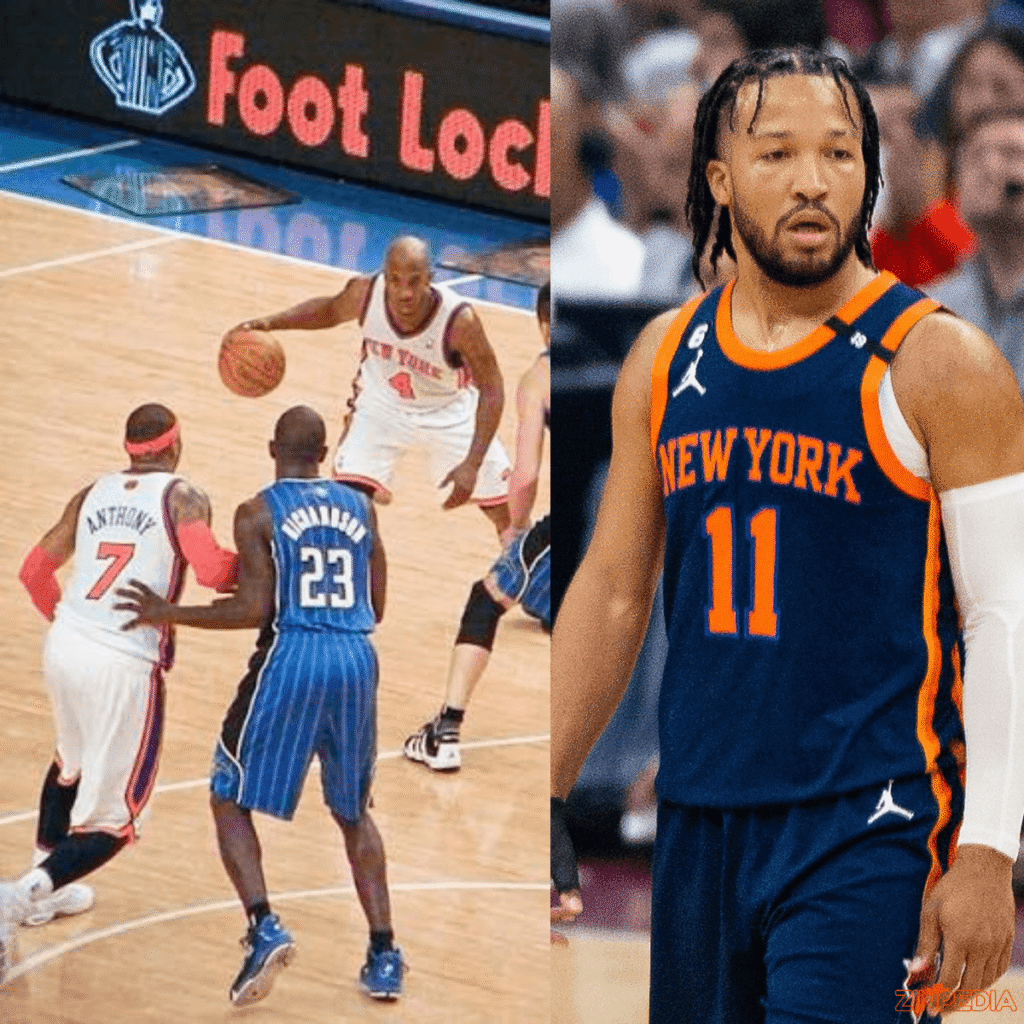
The final score says the New York Knicks won by 12 points. The game itself tells a more interesting story.
Orlando did not spend the entire night chasing New York. The Magic began brightly, created a third-quarter comeback and briefly moved in front. For long periods, the contest remained open. What eventually separated the teams was not effort, rebounding or even ball movement. New York simply produced cleaner scoring opportunities and converted them at an extraordinary rate.
The Knicks defeated the Magic 132–120 in their December 13, 2025 NBA Cup semifinal in Las Vegas. Jalen Brunson scored 40 points, Karl-Anthony Towns added 29, and OG Anunoby finished with 24. Orlando received 26 points from Jalen Suggs and 25 from Paolo Banchero, but the Magic could not keep pace with New York’s 60.7% shooting from the field.
A basic box score can tell readers who scored. A deeper review explains why those numbers mattered. This analysis looks at the game through shot selection, player roles, lineup balance and the short stretch that ultimately decided the outcome.
The Scoreline Was Comfortable, but the Game Was Not
Orlando opened the night with purpose. The Magic scored 36 points in the first quarter and carried a three-point lead into the second. Their early offense worked because they played before New York could fully organize its defense. Jalen Suggs pushed the tempo, Orlando’s wings attacked open lanes, and the ball rarely remained in one place for long.
New York changed the rhythm in the second quarter. Rather than trying to match Orlando’s speed, the Knicks became more selective. They scored 38 points in the period, compared with 28 from the Magic, and entered halftime ahead 71–64.
That seven-point advantage did not settle the game. Orlando made another push after the break and eventually moved ahead 89–88. At that moment, the Magic had erased New York’s control and turned the semifinal into a possession-by-possession battle.
The response from the Knicks was decisive. With the score later tied at 92, New York finished the third quarter by scoring eight straight points. The Knicks then opened the fourth with another basket, completing a 10–0 stretch and building a double-digit advantage.
New York scored 33, 38, 29 and 32 points across the four quarters. Orlando began with 36 but produced 28 points in each of the remaining periods. That contrast is important. The Magic had the more explosive opening, while the Knicks maintained a dependable scoring level for the entire game.
Jalen Brunson Did More Than Score 40 Points
Jalen Brunson’s 40 points naturally attract the most attention, but his control of the game was just as valuable as his scoring.
Brunson made 16 of 27 field-goal attempts, added eight assists and committed only two turnovers. He did not reach 40 by taking every available shot. Instead, he repeatedly identified the weakest point in Orlando’s defensive shape and attacked it.
When a defender gave him room, Brunson moved into his jumper. When the coverage became tighter, he used changes of speed to enter the lane. When Orlando sent additional help, he moved the ball to a teammate rather than forcing a difficult attempt.
That decision-making prevented the Knicks’ offense from becoming predictable. Orlando could not simply double-team Brunson on every possession because New York had other players capable of punishing the open space.
Brunson scored 25 points before halftime, keeping the Knicks stable while Suggs powered Orlando’s early attack. His second-half work was different. He became more deliberate, managed the clock and selected his moments. The result was a performance that combined individual scoring with responsible playmaking.
His eight assists produced additional value beyond his own 40 points. The low turnover total was equally important. In a semifinal featuring defensive pressure and several changes of momentum, Brunson rarely gave Orlando a free possession.
The game offers a useful lesson about evaluating guards. A large scoring total is impressive, but scoring without damaging team structure is more valuable. Brunson created points while keeping New York’s offense organized.
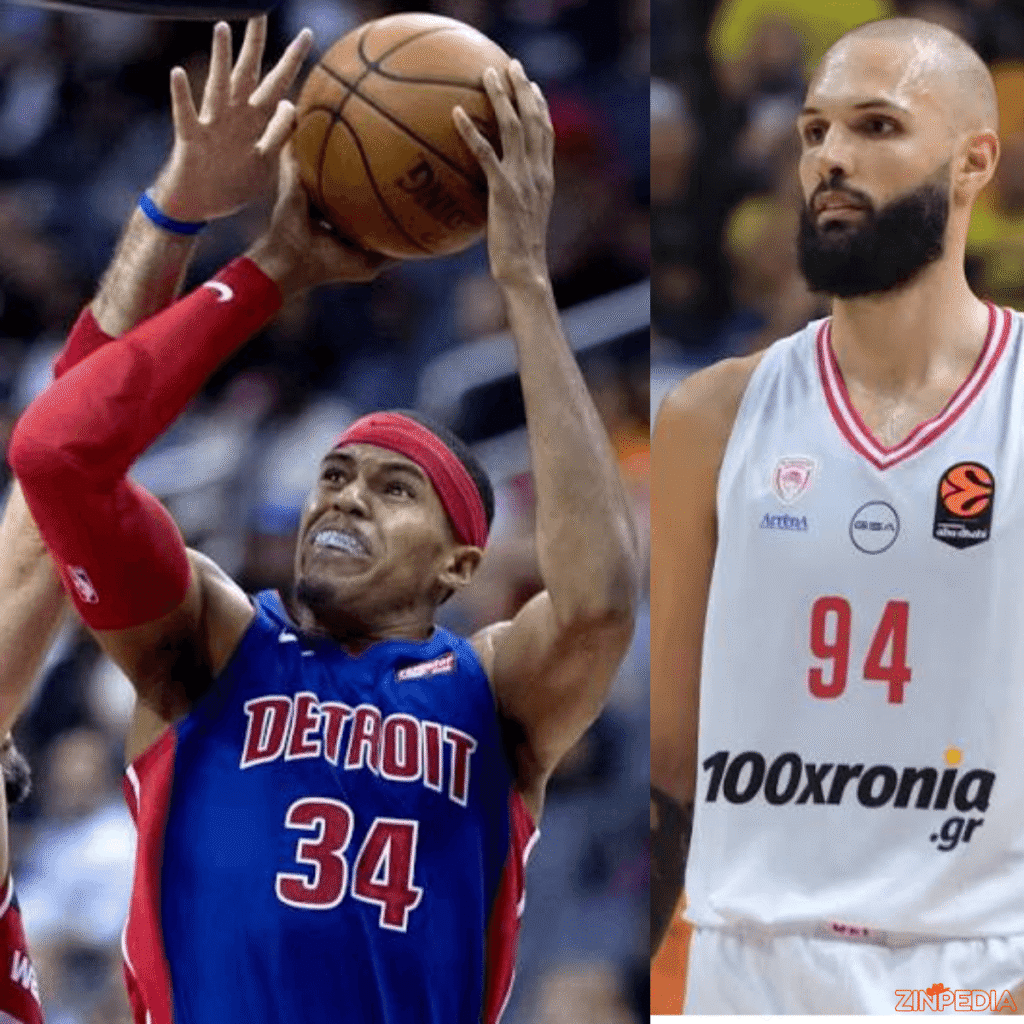
Towns and Anunoby Made Orlando’s Defensive Choices Painful
Focusing too heavily on Brunson created another problem: Karl-Anthony Towns was scoring with remarkable efficiency.
Towns finished with 29 points and eight rebounds while making nine of his 11 shots. He also converted nine of 10 free throws and did not commit a turnover.
His presence forced Orlando to choose between two uncomfortable defensive options. A bigger defender could handle his strength near the basket but might struggle when Towns moved outside. A smaller or more mobile defender could contest him on the perimeter but risk being overpowered inside.
Towns did not need a large number of attempts because he rarely wasted a favorable possession. He scored from the paint, stretched the defense with his shooting and earned free throws when Orlando became too physical.
OG Anunoby created a different type of pressure. He scored 24 points on eight-for-13 shooting, made three of four shots from beyond the arc and added three steals.
Anunoby’s shooting made aggressive help defense dangerous. Leaving him open to stop Brunson or Towns often meant surrendering a clean perimeter look. His defensive work also prevented Orlando from targeting him at the other end.
This was the central challenge for the Magic: New York’s three leading scorers required different defensive answers.
Brunson relied on pace, footwork and ball control. Towns combined size with shooting. Anunoby offered efficient finishing and multi-position defense. A strategy designed to limit one of them often created an opportunity for another.
Mikal Bridges contributed 16 points, while Josh Hart supplied 12 points, six rebounds and six assists. New York therefore received useful production from every starter rather than depending entirely on its three highest scorers.
Orlando’s Best Numbers Came with Important Limitations
Jalen Suggs was Orlando’s sharpest offensive player. He finished with 26 points and seven assists while converting 10 of 16 field-goal attempts.
His first half was especially strong. Suggs scored 25 points before the break, attacking gaps and forcing New York to defend him as a genuine primary option.
However, his influence almost disappeared after halftime. He attempted only one second-half shot and was unable to reproduce the aggression that had driven Orlando’s early offense. The difference was significant because the Magic needed another reliable creator beside Paolo Banchero.
Suggs’ final line remains excellent, but the distribution of his production matters. Orlando received nearly everything from him during the first two quarters and almost nothing as a scorer during the final two.
Banchero’s performance was more complicated. He recorded 25 points and eight rebounds, showing his ability to generate offense even against a strong defensive lineup. He was effective when using his strength inside or reaching his preferred areas in the middle of the floor.
His perimeter shooting, however, worked in New York’s favor. Banchero missed all seven of his three-point attempts and committed five turnovers.
Those misses changed the geometry of Orlando’s offense. New York could protect the lane more aggressively without paying a consistent price outside. Banchero continued to score, but the Knicks influenced where many of his attempts came from.
Desmond Bane added 18 points, seven assists and six rebounds. His all-around contribution was useful, particularly because Orlando needed additional creation. Yet his seven-for-17 shooting meant the Magic still lacked the efficient third scorer New York received from Anunoby.
Wendell Carter Jr. was Orlando’s most economical supporting scorer. He produced 14 points from only six field-goal attempts and made both of his three-pointers. Anthony Black contributed 12 points and eight rebounds but needed 15 shots and converted only one of six attempts from deep.
Orlando had enough individual production to remain competitive. What it lacked was the same relationship between volume and efficiency that New York enjoyed.
One Number Explains the Game Better Than the Rest
The clearest difference was field-goal accuracy.
New York made 51 of 84 shots. Orlando made 45 of 97. In other words, the Magic attempted 13 more field goals but finished with six fewer makes. The Knicks shot 60.7%, while Orlando ended at 46.4%.
That gap overpowered several areas in which Orlando performed reasonably well.
The Magic collected 41 rebounds, matched New York with 28 assists and recorded nine steals. New York also had 41 rebounds, 28 assists and nine steals. The teams were therefore level in several traditional categories.
Orlando also made 13 three-pointers compared with seven from the Knicks. On the surface, that appears to be a meaningful advantage. The problem was how many attempts the Magic required. Orlando took 42 shots from outside and made 31% of them. New York attempted only 20 threes and made 35%.
The Knicks did not need heavy three-point volume because they repeatedly reached efficient scoring areas. They produced 70 points in the paint, compared with 62 for Orlando, and attempted more free throws.
The contrast can be summarized simply:
Orlando created more shot attempts. New York created better shot attempts.
That distinction is why the Magic could win or match several categories and still lose by double figures.
Basketball analysis often gives too much attention to the number of possessions a team creates. Extra opportunities are valuable, but only when they lead to acceptable shots. Orlando’s additional attempts frequently became contested threes or possessions that did not pressure New York’s interior defense.
The Five-Minute Stretch That Broke Orlando’s Momentum
The most revealing section of the game did not last an entire quarter. It covered the end of the third period and the beginning of the fourth.
Orlando had worked hard to recover from its halftime deficit. The Magic’s 18–4 burst pushed them ahead 89–88 and gave them the emotional control of the game.
New York did not respond by increasing its pace or attempting quick hero shots. The Knicks returned to their most dependable actions, defended with greater discipline and stopped allowing Orlando to turn every possession into an open-floor opportunity.
A tie at 92 became a 100–92 New York lead by the end of the third. The first basket of the fourth increased the margin to 10.
That run changed the burden of the game. Before it, Orlando could play freely and attack without watching the clock. After it, every empty possession became more costly.
The Magic still had enough time to respond, but their offensive choices became less comfortable. New York could control tempo, use Brunson in favorable situations and force Orlando to defend for longer stretches.
This was not simply a hot shooting run. It was a change in game control. The Knicks moved from reacting to Orlando’s energy to deciding how the remaining minutes would be played.
Strong teams often win in this manner. They do not dominate every quarter. They identify the unstable part of a close game and produce one stretch that the opponent cannot reverse.
What This Match Revealed About Both Teams
New York’s performance showed why lineup balance is so valuable in an important game.
The Knicks did not ask Brunson to solve every possession alone. Towns gave them interior scoring and spacing. Anunoby supplied two-way impact. Bridges offered another reliable finisher, and Hart connected the lineup through rebounding and passing.
All five starters scored in double figures. The starting group accounted for 121 of New York’s 132 points.
That concentration of production could normally suggest weak bench scoring, but in this game it reflected the stability of the main lineup. New York’s starters remained productive enough that the bench did not need to manufacture a major offensive contribution.
Mitchell Robinson still influenced the result without scoring heavily. He collected nine rebounds and blocked four shots in 17 minutes. Tyler Kolek added four assists and finished with a plus-18 rating.
Orlando’s performance revealed a team capable of creating pressure but still vulnerable when its perimeter scoring becomes unreliable.
The Magic attacked the game with energy, moved the ball and refused to disappear after New York’s strong second quarter. Suggs demonstrated how dangerous he can be as an aggressive scorer. Banchero continued producing even when his outside shot failed, and Bane contributed as both a scorer and passer.
The limitation was consistency. Orlando needed Suggs’ first-half aggression later in the game, better perimeter choices from Banchero and Black, and a more efficient third scoring option.
The 2025–26 regular-season series between the teams finished level at two wins each, which shows that the matchup was not one-sided across the season. Orlando won the first two meetings, while New York took the next two, including the NBA Cup semifinal.
Frequently Asked Questions
What was the final score of the Orlando Magic vs Knicks game?
The New York Knicks defeated the Orlando Magic 132–120 in the NBA Cup semifinal played on December 13, 2025.
Who scored the most points in the match?
Jalen Brunson led all players with 40 points. He also recorded eight assists, four rebounds and only two turnovers.
Who was Orlando’s top scorer?
Jalen Suggs led the Magic with 26 points. He made 10 of 16 field-goal attempts and added seven assists.
How many points did Paolo Banchero score?
Banchero finished with 25 points and eight rebounds. He made 10 of 22 shots but missed all seven of his attempts from three-point range.
What were Karl-Anthony Towns’ match stats?
Towns recorded 29 points, eight rebounds and two assists. He shot nine-for-11 from the field and nine-for-10 from the free-throw line.
Which statistic had the greatest influence on the result?
Field-goal percentage was the biggest difference. New York shot 60.7%, while Orlando shot 46.4%.
Did Orlando make more three-pointers?
Yes. The Magic made 13 threes, compared with seven for New York. However, Orlando needed 42 attempts and shot only 31% from outside.
What was the key turning point?
New York’s 10–0 run across the end of the third quarter and start of the fourth changed the game. It turned a tie into a double-digit Knicks lead.
Who had the most blocks?
Mitchell Robinson recorded four blocks for New York despite playing only 17 minutes.
What was the head-to-head record that season?
Orlando and New York split their four 2025–26 meetings, with each team winning twice.
Final Verdict
The Orlando Magic vs Knicks match player stats point toward one clear conclusion: New York won through efficiency rather than overwhelming possession control.
Brunson’s 40 points formed the headline, but the victory depended on more than one scorer. Towns turned 11 field-goal attempts into 29 points. Anunoby delivered 24 points while contributing defensively. Bridges and Hart completed a starting group in which every player reached double figures.
Orlando had encouraging performances from Suggs, Banchero and Bane. The Magic matched New York in assists and steals, stayed competitive through three quarters and created more field-goal attempts.
But the Knicks converted 60.7% of their shots, scored 70 points in the paint and produced the game’s most important run when the score was tied.
The final margin was 132–120. The real separation was shot quality, composure and the ability to make the correct offensive decision when the game became tense.
Explore More Helpful Articles– Visit Now